OUR STORY
Theatrical Outfit (TO) is the second-oldest non-profit professional theater in Atlanta. Our mission is to “produce world class theatre that starts the conversations that matter” and we are guided by a deep love for our city and a commitment to the amazing artists that call Atlanta home. We are located at the center of downtown in a historic building, The Balzer Theater at Herren’s, which the AJC called “the city’s best small performance space.”
Over the course of its illustrious history TO has evolved into a theater of exceptional storytelling, with a unique voice that promotes discussion, reflection, and public discourse. As well as producing a five-show season of exceptional productions on our Mainstage, we run a robust community engagement program that includes forums for dialogue around the content of the plays, and service and education programs that deepen the impact of our work in Atlanta. We also run the “Made in Atlanta” new work program dedicated to developing new plays and exploring the untold stories of our city and the region.
Our building is important to our identity in two key ways: first, it was the home for Herren’s Restaurant, which was the first white restaurant to voluntarily desegregate in 1962, risking violent backlash in pursuit of racial equity in Atlanta; and second, during the conversion of the building in 2005, we invested in environmentally responsible building practices and became the first theater in the country to receive LEED certification (Leadership in Energy and Environmental Design). These facts embody our commitment to both a conscientious exploration of our history & a sustainable and equitable future for our city.
OUR HISTORY
1977–1982: The Performing Arena
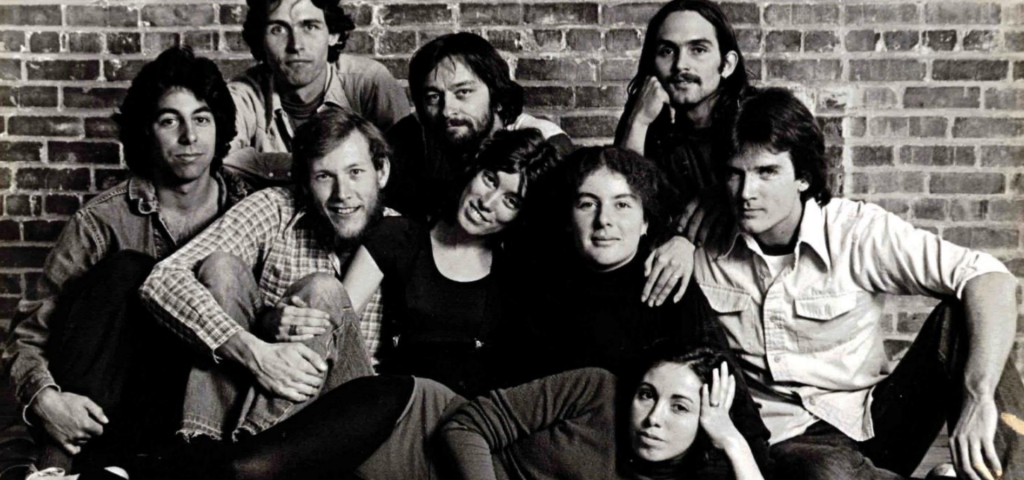
In late 1976, four friends started talking about starting a theatre company. Del Hamilton, David Head, Glenn Hilke, and Martin Swinger wanted something built like the experimental companies they admired — Iowa Theatre Lab, Bread & Puppet — where an actor might also compose the music, build the set, or teach the workshop, and where none of that would be unusual. Jeff Franklin, Marianne Fraulo, Lynda Macaluso, Celeste Miller, and Elise Witt joined soon after.
“We were a collective. We were our own internal board. We were company governed. We were a company of equals.” — Marianne Fraulo, founding company member
Nobody was paid. Nine artists split three federal CETA jobs grants between them and worked other jobs besides. The name came out of self-deprecation: they were an outfit that did theatre, so — a theatrical outfit.
The first public performance was a double bill of Sam Shepard one-acts, The Unseen Hand and Forensic and the Navigator, directed by Del Hamilton at the Open City Theatre in June 1977. That October the company opened its own space, the Performing Arena at 1052 St. Charles Avenue in Virginia-Highland — a converted laundromat with seventy seats, previously home to Celeste Miller’s Gypsy Rainbow Dance Theatre. The bathroom was in the corner of the performance space, so anyone who needed it mid-show crossed the stage to get there. Longtime audiences still bring it up.
The company’s first summer was spent in the Berkshires, six weeks of teaching each other music, dance, writing, and improvisation, and starting work on an adaptation of Macbeth. From there they drove to Vermont to build puppets with Peter Schumann’s Bread & Puppet Theatre and brought the technique back for street theatre across the Southeast.
Macbeth opened at the Performing Arena in April 1978. The Folger Shakespeare Library’s Shakespeare Quarterly named it the Shakespeare event of the year in Georgia and singled out the bare-stage swordfight as more dangerous-feeling than a recent Royal Shakespeare Company staging with a full arsenal of blades. That June the production played ten days at the Black Box Theater on West 3rd Street in New York.
“The limitations of our space and our budget and our company size forced decisions of economy that served the story without diminishing it.” — Marianne Fraulo
The rest of the work at the Performing Arena ran the range on purpose: Don Q!, Moon Myth, Alice in Wonderland, The Lower Depths, Visions of Joan of Arc, Rasputin with a young Chris Kayser in the title role, Equus. The community work ran alongside it in prisons, halfway houses, mental health facilities, and schools, and much of that material was developed with those audiences rather than for them.
In 1979 the City of Atlanta, the High Museum, the Georgia Council for the Arts, and the National Endowment for the Arts brought four artists to Atlanta for a month-long residency called Creative Collaboration — Italian visual artist Michelangelo Pistoletto, theatre director Leonello Gennaro, jazz musician Enrico Rava, and American composer Morton Feldman. They worked with Atlanta artists in community arts centers, galleries, shopping malls, storefronts, and on street corners. That summer TO artists were invited to Italy, first to a village-wide piece in Corniglia in the Cinque Terre, then to Torino to make an original work, Straniero in un Paese Strano.
By 1981 it was clear the company had outgrown a seventy-seat laundromat.
1982–1989: The Kress Years
In 1982 Theatrical Outfit leased an old Kress five-and-dime at Peachtree and 10th and converted it into a 20,000-square-foot black box, ten times the size of the Performing Arena. David Head became Artistic Director and Sharon Levy became Managing Director. The pace changed immediately: five or six productions a season, plus late-night shows, readings, and space rented to younger companies.
“While it wasn’t a resident company, it felt that way — because people performed over and over and over again and they got to know one another. So it just got better and better.” — Sharon Levy, Managing Director, later Artistic Director
In 1984 TO negotiated the first Actors’ Equity Small Professional Theatre contract in the Southeast, which let local actors join the union without pricing the company out of hiring them. That October the Negro Ensemble Company brought A Soldier’s Play and Southern Comforts to the Kress, the first time TO had hosted a national company.
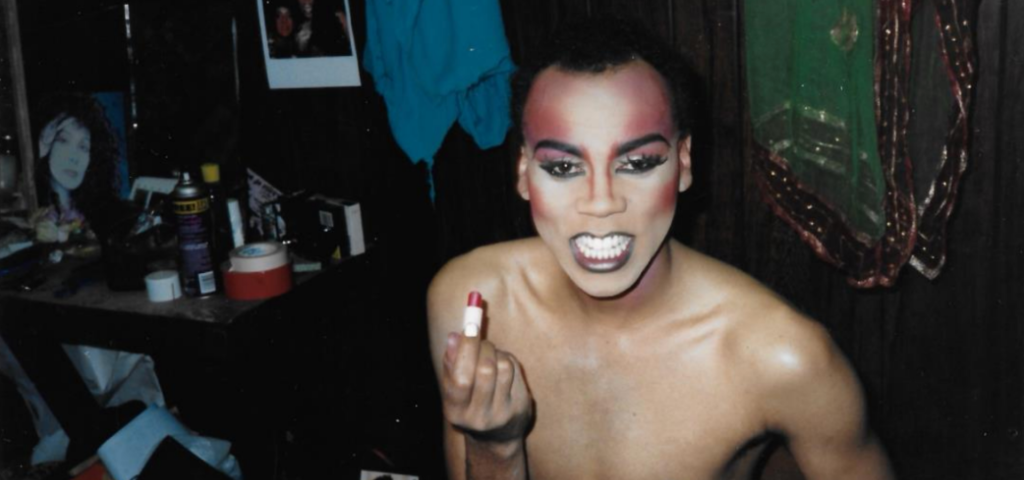
In July 1985 the company mounted the Atlanta premiere of The Rocky Horror Show, directed by Bill Yates, produced with Pamella O’Connor, and starring a then-unknown RuPaul Charles as Riff Raff alongside Gordon Paddison, Megan McFarland, Stuart Culpepper, and an interracial Brad and Janet in Christian Hesler and Crystal Fox. Lines ran down the block. The run was extended repeatedly and pushed back the start of the next season.
Mabou Mines came from New York twice: Cold Harbor in February 1986, with music by Philip Glass, and in September 1987 the world premiere workshop of Lee Breuer’s Lear, gender-reversed, with Ruth Maleczech in the title role. TO’s own casting kept moving ahead of its moment — the Rocky Horror Brad and Janet, then a trans actor in a lead role in Rashomon in 1988, directed by Sharon Levy. This era carried real loss. The AIDS crisis took many artists from Atlanta’s theatre community in this decade, several of them TO company members.
In late 1987, after five seasons that had made TO one of the most talked-about theatres in Atlanta, Sharon Levy became Artistic Director.
“We were finding material choices, ways of working, that would push people just enough out of their comfort zone — but not so much that they were horrified. And once or twice they were horrified. We did do that. But you don’t know where the boundary is until you go over it.” — Sharon Levy
1989–1995: Eddie Levi Lee and Phillip DePoy
“The board’s idea was: this is the artistic director’s theatre. Whatever the artistic director decides is what our vision will be. Rather than having an established vision that the artistic director had to fit into, the artistic director could choose the vision.” — Phillip DePoy, Artistic Director 1991–1995
Eddie Levi Lee had adapted Hamlet: The Musical with Rebecca Wackler, with music and lyrics by Phillip DePoy. It ran at the Kress from November 1988 into January 1989 and became an unexpected hit. Levy handed the company to Lee that summer, and DePoy came with him.
“I had such an opportunity at the outfit — to write plays, to collaborate with other people on writing plays, or to encourage other playwrights to come and create something new at the outfit. It greatly expanded my horizons as a playwright.” — Phillip DePoy
DePoy took the company at its word. Under him TO programmed itself as Georgia’s only new music theatre — original work, or new interpretations of classics, all of it with original music. Appalachian Christmas Homecoming, which he wrote with Lee, ran every December from 1989 through the mid-90s and paid for itself and for the next show in the season. The company also functioned as a landlord and an incubator for new work from other companies.
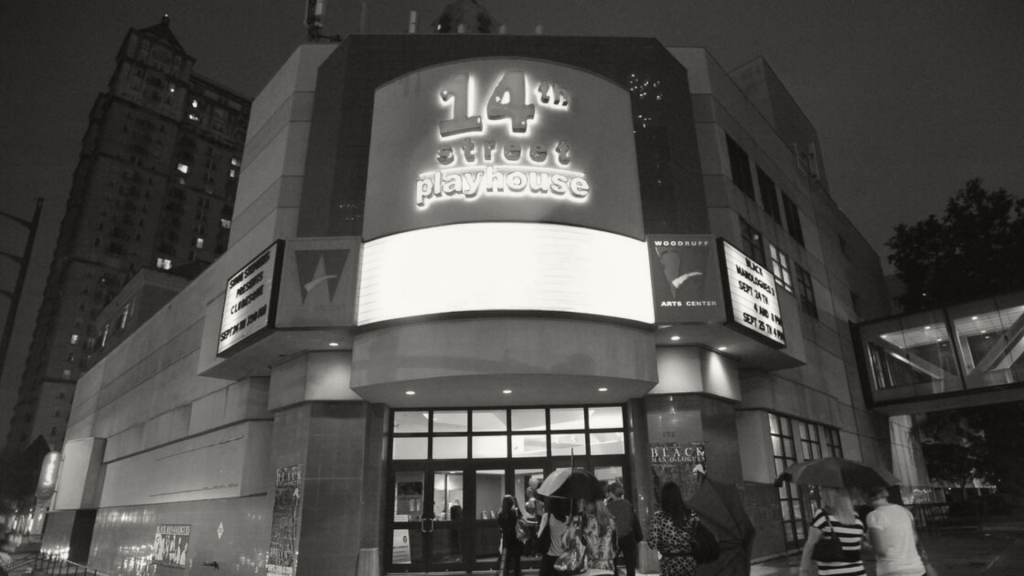
TO relocated to the 14th Street Playhouse in the early 90s, and the programming took a more explicitly socially conscious turn, including a collaboration with the Carter Center and a project with the Atlanta Committee for UNICEF built around the stories of children who had lived through the Bosnian war.
1995–2020: The Tom Key Years
Tom Key had been an actor, playwright, director, and producer for twenty years, and had watched The Rocky Horror Show and Hamlet: The Musical from a seat in the Kress building. He became Artistic Director in the fall of 1995, when TO’s annual budget was under $300,000.
His first move was to nearly triple what the company paid its artists, on the argument that ticket sales follow the artist and funding follows the ticket sales. The budget doubled within about three years. By the time he retired it was close to $2 million.
In 1999 he relocated the company from Midtown to the Rialto Center downtown, an 833-seat house he later called a tough place for theatre but a good place to prove a point.
“You want to protest, you go downtown. You want to maximize your ability to be heard, you go to the center of the city.” — Tom Key, Artistic Director 1995–2020
The point being proved was that a downtown audience existed. Atlanta had a world-class airport, world-class hotels, and world-class meeting centers, and needed a theatre company to match. In 2005 the company bought and renovated the former Herren’s Restaurant on Luckie Street and opened the Balzer Theater at Herren’s, a 200-seat house that the U.S. Green Building Council recognizes as the first theatre in the country to earn LEED certification.
Two productions from these years say most of what the era was about.
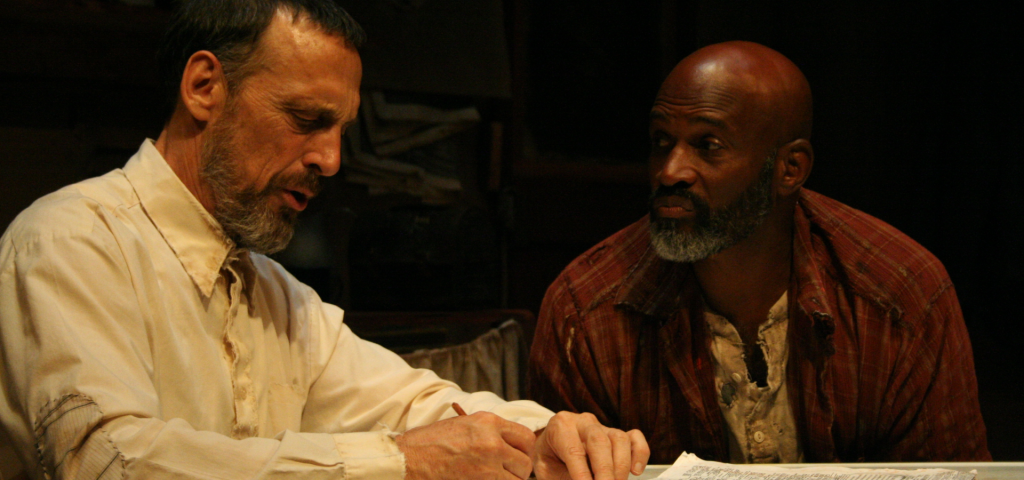
Athol Fugard’s Blood Knot played the 14th Street Playhouse in February 1997, directed by David Bell, with Tom Key as Morris and Kenny Leon as Zachariah. Twelve years later the same two actors did it again at the Balzer, directed by Susan Booth. By then Key ran TO, Leon had run the Alliance and founded True Colors, and Booth ran the Alliance. Three artistic directors, one play about two brothers.
“You don’t do any of this stuff on your own. It’s a collaborative art form, and life is a collaborative art form.“— Tom Key
Janece Shaffer’s Brownie Points had its world premiere at the Balzer in February 2010, directed by Jasmine Guy. Shaffer made a twenty-minute moderated talkback after every performance a condition of the production, run by the Anti-Defamation League. One night, following a scene in which a Black character is pulled over by police, a white audience member asked whether that really still happened. A Black audience member answered that he was teaching his fifteen-year-old son to drive, and teaching him what to do not if but when he was pulled over. The two men became friends and stayed in touch for years. This was two years before Trayvon Martin.
Over 25 years Key paired classics with literary adaptations, several of them his own — Walker Percy’s The Moviegoer and Lost in the Cosmos, Truman Capote’s A Christmas Memory, and in 2010 John Kennedy Toole’s A Confederacy of Dunces, after an unsolicited call from a notoriously protective literary estate offered him the rights. He directed Horton Foote’s The Chase and Dividing the Estate, staged Romulus Linney’s adaptation of Ernest J. Gaines’s A Lesson Before Dying, and oversaw more than a dozen world premieres.
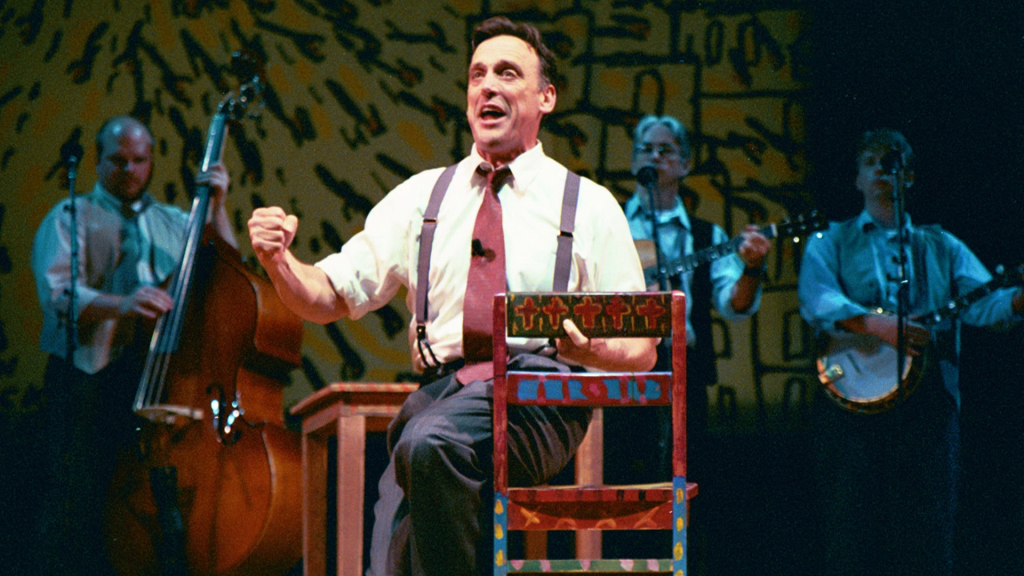
He remains best known nationally for something he wrote before he ever led TO. In 1981 he co-wrote Cotton Patch Gospel with Russell Treyz, with music and lyrics by Harry Chapin, and starred in its off-Broadway debut. He staged it at Theatrical Outfit four times over the following decades, including as the closing production of his final season in the spring of 2020.
“The things we came up against — in hindsight, they’re invitations to grow. Invitations to evolve.” — Tom Key
Key retired on June 30, 2020, after the longest tenure of any artistic director in the company’s history. The City of Atlanta declared the day Tom Key Day; Fulton County had marked its own two days earlier; Mayor Keisha Lance Bottoms presented him with the Phoenix Award. Theatrical Outfit named its paid apprenticeship program in his honor.
2020–Today: Matt Torney and “Made in Atlanta”
“One of our core goals is to create a thriving home for Atlanta artists right in the heart of our city.” — Matt Torney
Matt started on July 1st, 2020, right at the beginning of the COVID pandemic. On July 2nd, he cancelled all the remaining programming for the next year. Downtown Dialogues, a digital play reading series, kept audiences engaged through 2020 and 2021 while TO planned its return.
The partnership work has grown alongside the new play program. A co-production of The White Chip, about addiction and recovery, played as a free pop-up performance at a Midtown treatment center, built around private post-show conversations, and drew national press for the model. A partnership with the Breman Museum brought Remember This: The Lesson of Jan Karski and The Lehman Trilogy to Atlanta; The Lehman Trilogy later transferred to Alabama Shakespeare Festival. LAUNCHPAD gives Atlanta playwrights a faster, smaller-scale path to production.
“Our challenge was simple. We provide the theatre, the rehearsal space, the lights, the sound, and a stage manager. You bring your best original idea. We wanted to keep it simple and keep it real.” Matt Torney
Made in Atlanta launched in the 2020–21 season with four parts — readings, workshops, commissions, and mainstage premieres — built to carry a local playwright from first draft to opening night. FLEX, by Candrice Jones, premiered at Theatrical Outfit and was later produced at Lincoln Center, with every subsequent production nationally required to credit its Atlanta origin. Young John Lewis, a hip-hop musical about the congressman’s early years as an organizer, was commissioned, developed, and premiered here, won five Suzi Bass Awards including Outstanding Production of a Musical, and toured a concert version to four venues and nearly 2,500 Atlanta students.
The Heart of the City campaign raised $3.5 million to renovate the public spaces, retire all organizational debt, and rebuild front-of-house. Bar and concession revenue has tripled since. Audiences have returned past pre-pandemic levels and are more diverse than they were before.
In 2026–27, Theatrical Outfit turns 50.
TO’s work has drawn 88 award nominations since 2020.